Every day, students ask the same question:
“Is my A Level subject combination right?”
And the truth is — most students choose their A Levels without fully understanding how those subjects affect university admissions. This blog will help you make that decision clearly, logically, and without pressure.
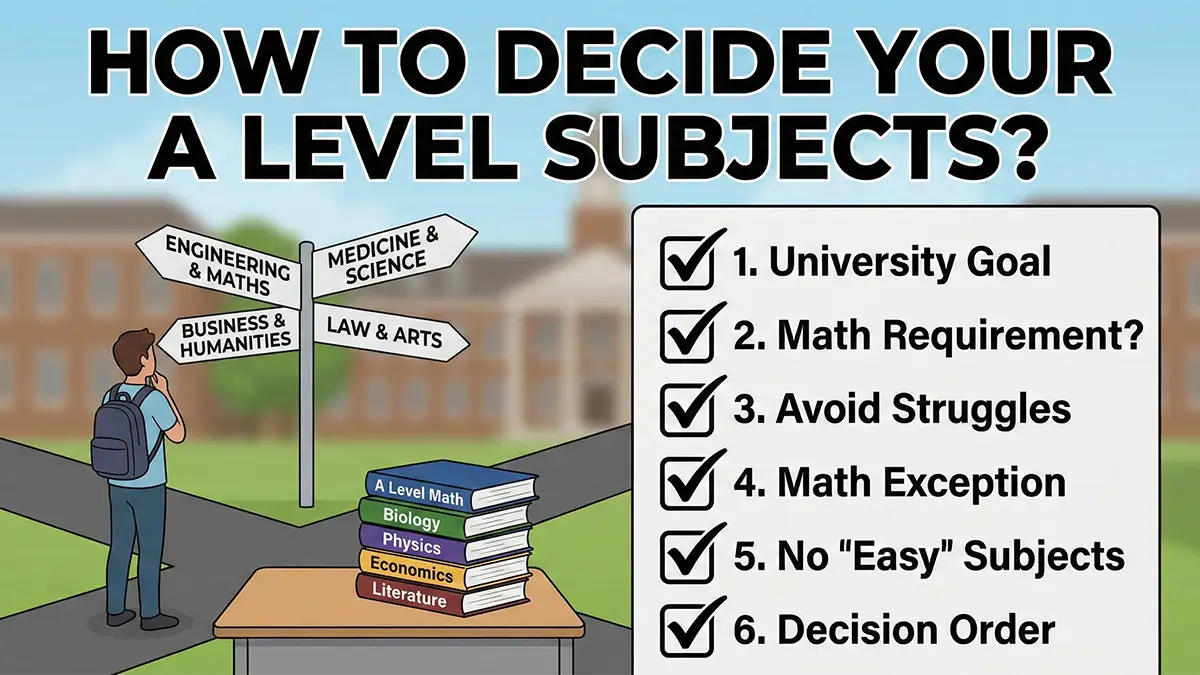
1. Start With Your University Goal (Not Trends)
Before choosing subjects, ask yourself one simple question: What do I want to study at university?
If you’re aiming for engineering, finance, technology, economics, or business, then A Level Math is not optional.
Most universities list Math as a core admission requirement, especially for competitive programs.
2. When Is Math NOT Required?
If your goal is medical studies in Pakistan, then:
- A Level Math is not required
- You must have Physics, Chemistry, and Biology
This is one of the few clear exceptions. So yes — for most degrees, Math is essential. But for medicine (locally), the science trio matters more.
3. Don’t Choose Subjects You Struggled With in O Levels
This is where many students (and parents) make mistakes.
If you struggled badly with a subject in O Levels:
- Taking it again at A Level (which is much harder) will only increase stress
- Grades usually suffer
- Confidence drops quickly
🚫 Parents should not force engineering or medical paths if the student has no interest or aptitude.
4. The One Exception: Math
Even if you didn’t love Math in O Levels — it may still be worth taking A Level Math, because:
- It keeps more university options open
- It’s required for most competitive degrees
- It’s often more valuable than “easier” subjects
So yes — avoid subjects you disliked, except Math (if your goals require it).
5. Don’t Take Extra Subjects Just Because They Seem Easy
Another common mistake:
“I’ll take one extra subject — it looks easy.”
That’s risky. Before adding any extra subject:
- Know which universities require it
- Be confident you can score well
- Understand the workload
Extra subjects only help if you perform strongly.
6. Decide in the Right Order (This Matters)
Always follow this sequence:
- What do I want to study?
- Where do I want to study?
- What subjects do universities require?
Not the other way around. Choosing subjects without an end goal leads to limited options later.
Final Advice
A Level subject selection is not about:
- Friends’ choices
- Parental pressure
- What “sounds impressive”
It’s about keeping doors open without burning yourself out.
If you’re unsure, speak to someone who understands:
- University admissions
- Subject combinations
- Long-term consequences
Good advice now can save you years later.